
Franz Lorenz Salas
Project Management

ARDEP is deployed in the Mercedes-Benz FlexCAR Rolling Chassis: a modular open research vehicle originally developed in a large consortium at ARENA2036. Here's what it does there, and what that means for automotive R&D.
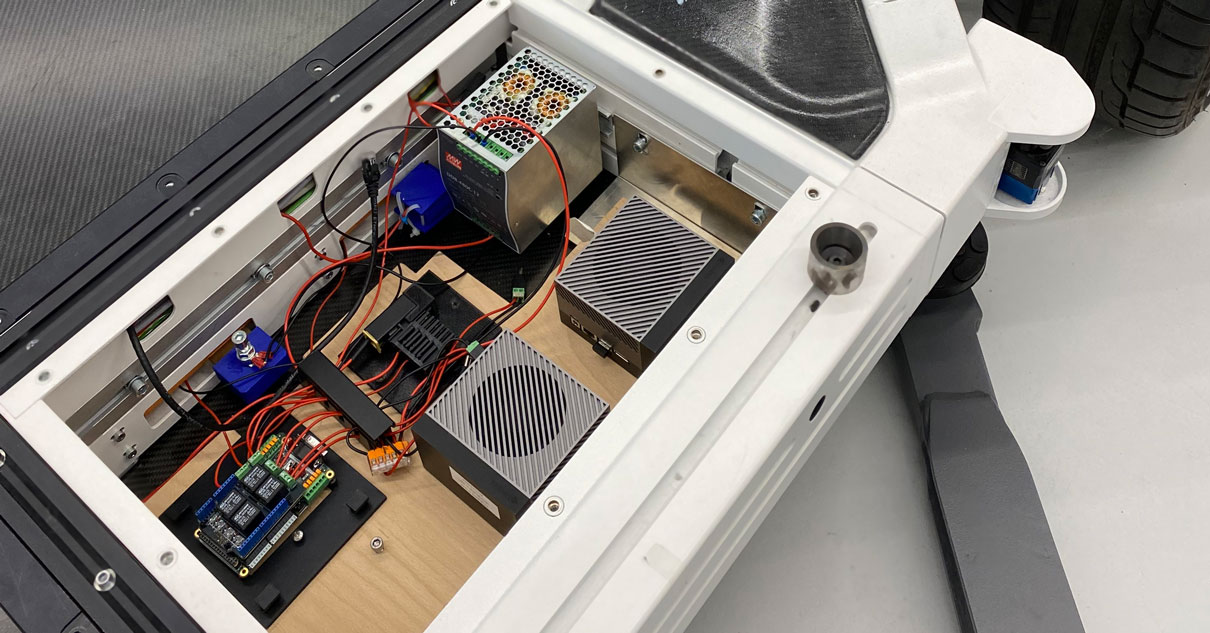
Automotive development has a long tradition of getting things right before they ship. Requirements are written, architectures are reviewed, standards are followed. Requirements are written, architectures are reviewed, standards are followed. And for good reason. But in research and early-stage development, this thoroughness can become a bottleneck. When the goal is to try new things quickly and learn from them, waiting weeks just to get new hardware talking to the rest of a vehicle isn't a process problem. It's a fundamental mismatch between the tools available and the work that needs to get done.
"A working software system with the most horrid implementation is vastly preferable to any non-working one that uses only the most beautiful concepts."
- Andreas Lauser | Automotive R&D
This tension between moving fast and building right is exactly what the Automotive Rapid Development Platform (ARDEP) was designed to address.
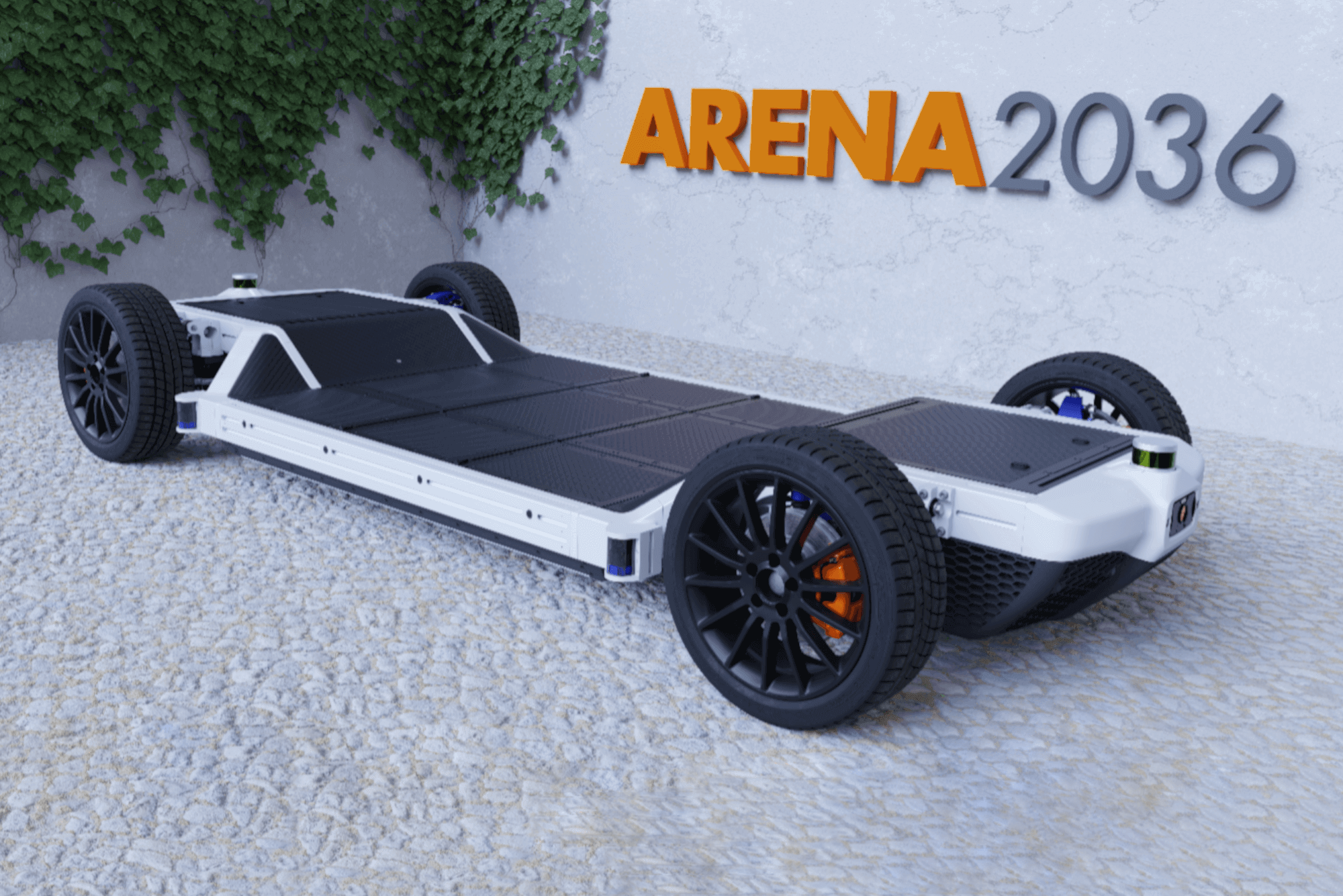
The Rolling Chassis a fully drivable, electrically powered research platform: a modular vehicle base built not to be sold, but to be experimented on. It exists without a fixed body, without production constraints, and without a single customer to satisfy. Instead, it is a living laboratory on wheels.
The Rolling Chassis emerged from FlexCAR, an ambitious publicly-funded joint project that ran from 2018 to 2023 at the ARENA2036 research campus on the University of Stuttgart grounds, a unique environment where industry and academia work side by side on pre-competitive topics. The project brought together Mercedes-Benz, Fraunhofer IAO, Nokia, DXC, and others around a compelling analogy: just as the smartphone opened its hardware to third-party developers through standardized APIs, FlexCAR aimed to do the same for the car.
When the FlexCAR consortium concluded in 2023, the Rolling Chassis transitioned into the full stewardship of Mercedes Benz continuing its life as a research tool for internal R&D and publicly-funded follow-on projects including SofDCar and CARpulse. It is connected via 5G, runs an Ethernet-based network with DDS middleware for real-time data exchange, and is designed to support over-the-air updates. In short, it already behaves like the kind of software-defined vehicle the industry is still working toward.
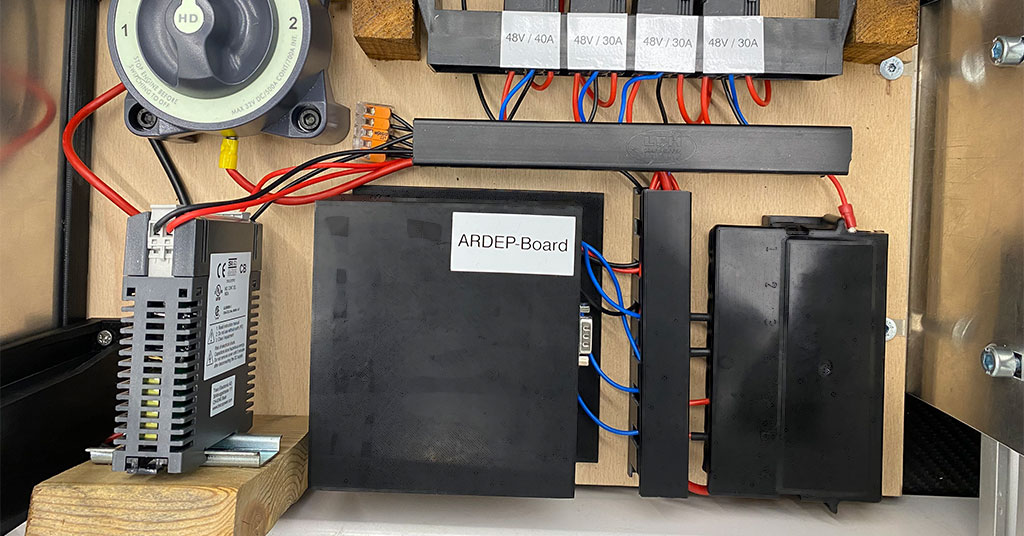
The ARDEP is an open-source hardware and software development board built specifically for automotive environments, developed by Frickly Systems for Mercedes-Benz. It is publicly available on GitHub under the Mercedes-Benz organization.
Traditional development tools for automotive environments have often meant proprietary ecosystems, significant licensing costs, and integration overhead before any real work can begin. ARDEP takes a different approach: reduce the friction first, and let engineers focus on what they're actually trying to build.
The board ships with native CAN-FD and LIN support, with no additional shields or adapter layers required, along with built-in UDS diagnostics (ISO 14229), OTA firmware update support, and optional shields for high-voltage I/O and power switching. The firmware stack is built on Zephyr RTOS, a mature, well-documented open-source foundation that is increasingly finding its way into serious production environments and is moving toward safety certification.
Robustness was a core design requirement from the start: not just electrically, but mechanically. The board handles the voltage ranges and transient conditions common in automotive environments, comes with quality connectors, and ships with spacers and mounting hardware so it can be properly secured whether on a lab bench or inside a vehicle. The goal was a platform that holds up from every angle: electrical, mechanical, and software.
ARDEP is already deployed in the Rolling Chassis, where it currently controls relays for power distribution across the vehicle. In a research platform that gets reconfigured frequently for different experiments, a programmable controller is far more practical than hardwired solutions. Electrical topology can be changed in software rather than in the wiring harness.
Mercedes-Benz is currently working to migrate the Rolling Chassis to a zonal E/E architecture, dividing the vehicle into physical zones, each with a dedicated controller managing local sensors and actuators. This mirrors a direction the broader automotive industry is heading, moving away from the proliferation of individual ECUs toward fewer, more capable nodes. ARDEP's native CAN and LIN support, combined with the power switching capabilities of the Power IO Shield, make it a natural candidate for exactly the kinds of integration challenges that zonal architectures involve.
Both ARDEP and FlexCAR share a commitment to openness that goes beyond philosophy. ARDEP's hardware design files, firmware, and documentation are all publicly available. External researchers, universities, and suppliers can study the design, build on the codebase, and contribute improvements without needing special access or licenses.
For Frickly Systems and Mercedes-Benz alike, this reflects a practical conviction: in a domain as complex as automotive E/E development, open and reproducible tools create more value than proprietary lock-in. Research moves faster when teams aren't rebuilding the same infrastructure from scratch. The FlexCAR Rolling Chassis is one of the most visible demonstrations of what that approach can enable.
With ARDEP V2 deployed in the FlexCAR and the Rolling Chassis evolving toward a fully zonal architecture, the foundation is in place for increasingly sophisticated applications. The low-level integration work (sensor bring-up, relay control, diagnostic access) can happen faster, leaving more time for the research questions that actually matter.
If you're working in automotive R&D and find yourself spending more time on infrastructure than on your actual problem, that's exactly the situation ARDEP was built for.
Find the project on GitHub: github.com/mercedes-benz/ardep
Documentation: mercedes-benz.github.io/ardep
ARDEP was developed by Frickly Systems GmbH in collaboration with Mercedes-Benz and continues to be actively maintained.